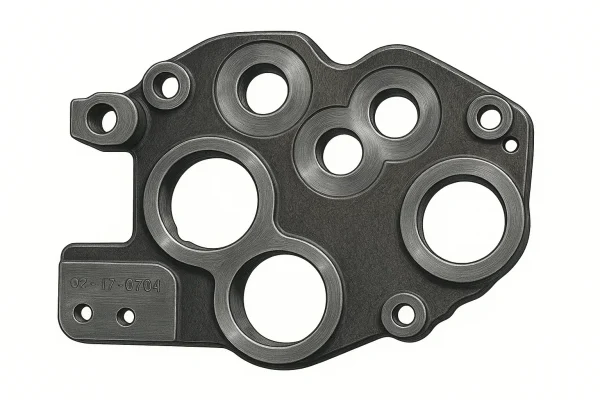
What is a Intermediate Plate?
The Intermediate Plate is a structural and functional component used in agricultural machinery, often serving as a connector or support element between major parts such as frames, transmissions, or implements. It helps distribute loads and facilitate assembly alignment, enhancing the durability and efficiency of farming equipment.
Key Features of Intermediate Plate
High-Strength Material
Typically fabricated from mild or structural steel plates, heat-treated or coated to resist corrosion and wear in agricultural environments.
Precision Drilled Holes
Machined or punched holes for mounting bolts or pins ensuring secure attachment and proper alignment of connected components.
Customizable Dimensions
Plates are manufactured in various thicknesses, widths, and lengths to suit diverse equipment specifications and operational loads.
Load Distribution Design
Optimized to evenly distribute mechanical stresses, reducing localized fatigue and extending the lifespan of assemblies.
Versatile Application
Functions as a mounting point, spacer, or adapter plate for various tractor implements, ploughs, seeders, or harvesters.
Structural Support: Provides a rigid base to attach multiple components, maintaining the mechanical integrity of agricultural implements.
Alignment Facilitation: Helps align shafts, gears, and assemblies accurately during installation and operation.
Load Transfer: Distributes forces generated during tillage, harvesting, or material handling across a broader area.
Vibration Reduction: Serves as a buffer to dampen vibrations transmitted between connected parts, reducing mechanical wear.
Operational Stability: Enhances the stability and balance of mounted tools or implements during field operation.
Ease of Maintenance: Allows easy removal or replacement of attached components without disassembling the entire machinery.
Customization and Retrofit: Enables modifications or additions to existing machinery setups, adapting equipment to different crop or soil conditions.